
For Professionals
Careers at Sagebrush Psychotherapy
Primary Therapist
We're not currently hiring, but we're always interested in connecting with thoughtful clinicians who align with our values.
If Sagebrush feels like the kind of practice where you'd thrive, we encourage you to submit an application below. We'll keep it on file and reach out if a position becomes available. New openings are filled from this applicant pool first.
Job description:
Sagebrush Psychotherapy is a DBT-oriented group practice in Los Angeles.
We are looking for a licensed or associate therapist to join our team. This role includes providing individual, couples, and family therapy, leading DBT skills groups, participating in ongoing supervision and consultation, and contributing to the continued growth of the practice through administrative and marketing responsibilities.
While our clinicians treat a variety of presenting concerns, much of our work involves Borderline Personality Disorder, significant emotion dysregulation, suicidality, and trauma.
The clinicians who tend to thrive here are genuinely curious and enjoy learning. They think deeply about their clinical work, ask questions, seek consultation, and see feedback as an important part of becoming a stronger therapist. Our goal is not simply to offer supervision and consultation, but to create a space where clinicians can think deeply about their work, receive support through the challenges that come with being a therapist, and build sustainable careers. We believe even excellent therapists need thoughtful colleagues they can turn to for support, consultation, and honest discussion.
Responsibilities
Clinical Work
Provide individual, couples, and family therapy
Lead DBT skills groups and provide comprehensive DBT treatment
Deliver care in alignment with practice standards, including DBT-informed and other clinically appropriate approaches
Minimum caseload of 15 attended sessions per week
Admin Responsibilities
Admin work includes notes, client inquiries, and trainings
Follow through on all assigned tasks and responsibilities without reminders
Respond to client and practice communication in a timely and consistent manner
Manage and respond to client inquiries, including intake calls and follow-up
Approx. 5-10 hours per week depending on inquiry volume
Marketing
Contribute to shared, ongoing marketing efforts, like blog writing, directory profiles, outreach, and networking
4 hours per month on average
Supervision and Team Engagement
Attend and actively participate in weekly supervision and consultation
Engage in case discussion, feedback, and problem-solving
Seek support when needed and communicate openly about challenges
Work collaboratively and contribute to a shared approach to clinical care
Qualifications
Required
Active California BBS license or Associate registration
Preferred
Training or experience in Dialectical Behavior Therapy
Training in EMDR
Compensation
Clinical Hours
$50–$90 per client session to start, depending on session rate
Pay increases as your monthly caseload grows (tiered structure based on total monthly income)
Additional Pay
Administrative, supervision, and marketing hours paid at $20/hour
Benefits & Support
Autonomy over your calendar
Paid training in DBT
Occasional consultation and trainings with outside specialists
Paid sick time
Hands-on support in building and maintaining your caseload
Consistent, reliable supervision that is active, direct, and focused on real clinical growth (not just check-ins). You won’t be left figuring things out on your own
Why Sagebrush Psychotherapy?
Our work is grounded in our motto: Fearlessly Compassionate.
Learn about this below
-
![Graphic about growth, accountability, and therapeutic skills. A detailed description is provided below.]()
Graphic about growth, accountability, and therapeutic skills. A detailed description is provided below.
A graphic displaying the phrase "Fearlessly Compassionate" over a landscape of tall green cacti beneath a cloudy sky.
The image represents Sagebrush Psychotherapy's core motto and therapeutic approach. The phrase "Fearlessly Compassionate" emphasizes providing care with both courage and compassion while supporting clients through difficult experiences.
The Sagebrush Psychotherapy name appears at the bottom of the graphic.
-
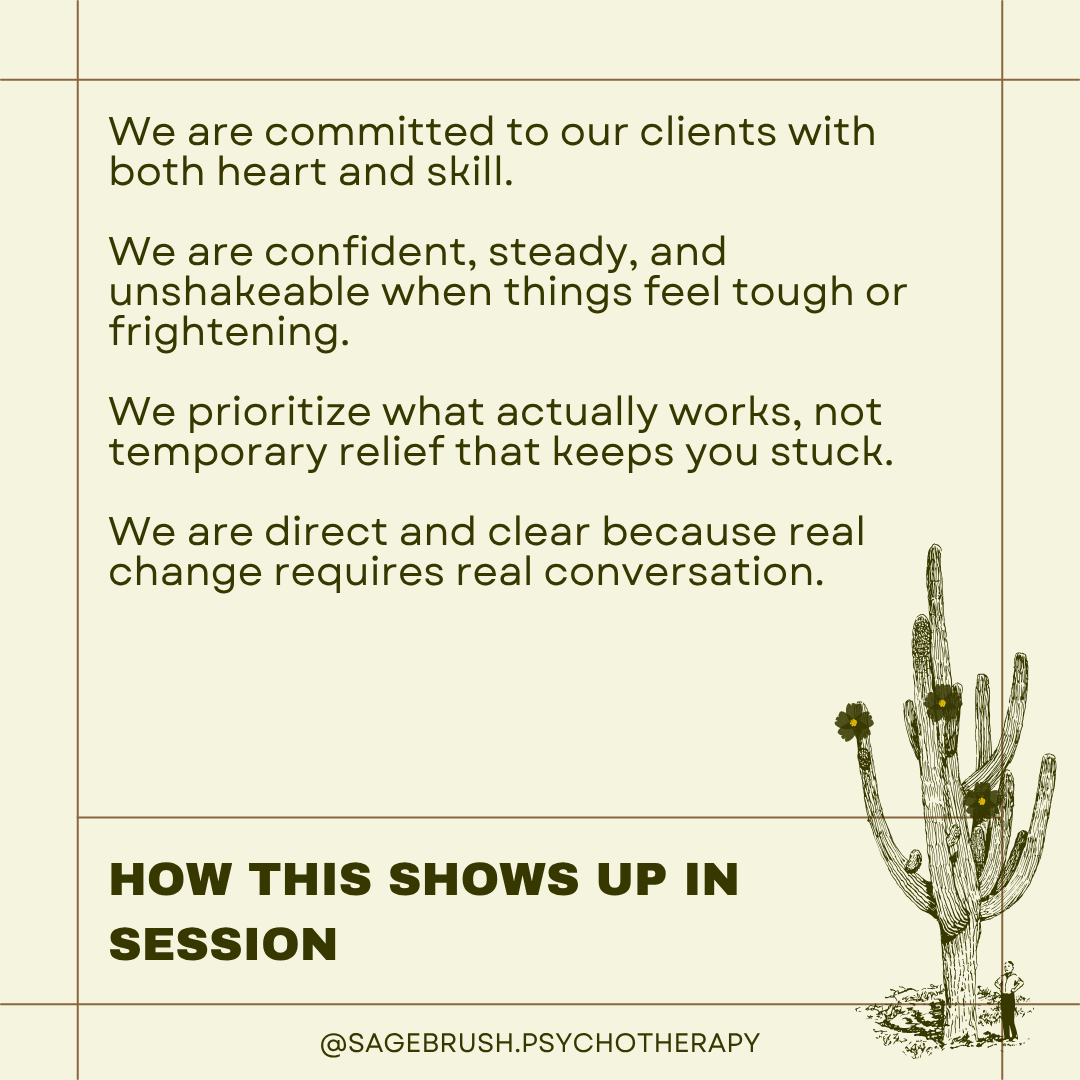
![Sagebrush Psychotherapy graphic describing its therapeutic approach.A detailed description is provided below.]()
Sagebrush Psychotherapy graphic describing its therapeutic approach.A detailed description is provided below.
We are committed to our clients with both heart and skill.
We are confident, steady, and unshakeable when things feel tough or frightening.
We prioritize what actually works, not temporary relief that keeps you stuck.
We are direct and clear because real change requires real conversation.
HOW THIS SHOWS UP IN SESSION
@SAGEBRUSH.PSYCHOTHERAPY
-
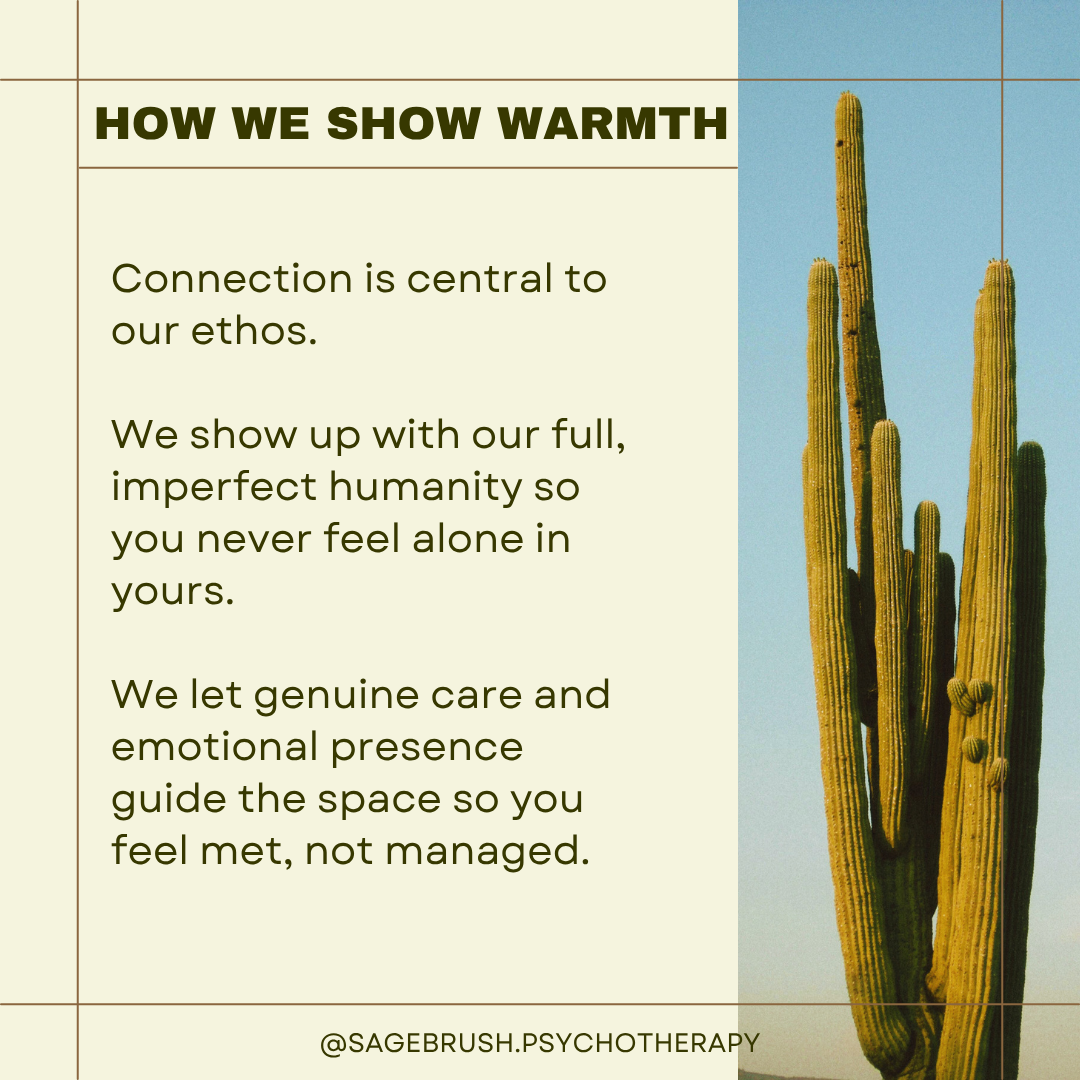
![How We Show Warmth graphic about connection, care, and emotional presence. A detailed description is provided below.]()
How We Show Warmth graphic about connection, care, and emotional presence. A detailed description is provided below.
A graphic titled "How We Show Warmth" featuring a tall cactus against a blue sky background.
Connection is central to our ethos.
We show up with our full, imperfect humanity so you never feel alone in yours.
We let genuine care and emotional presence guide the space so you feel met, not managed.
@SAGEBRUSH.PSYCHOTHERAPY
-
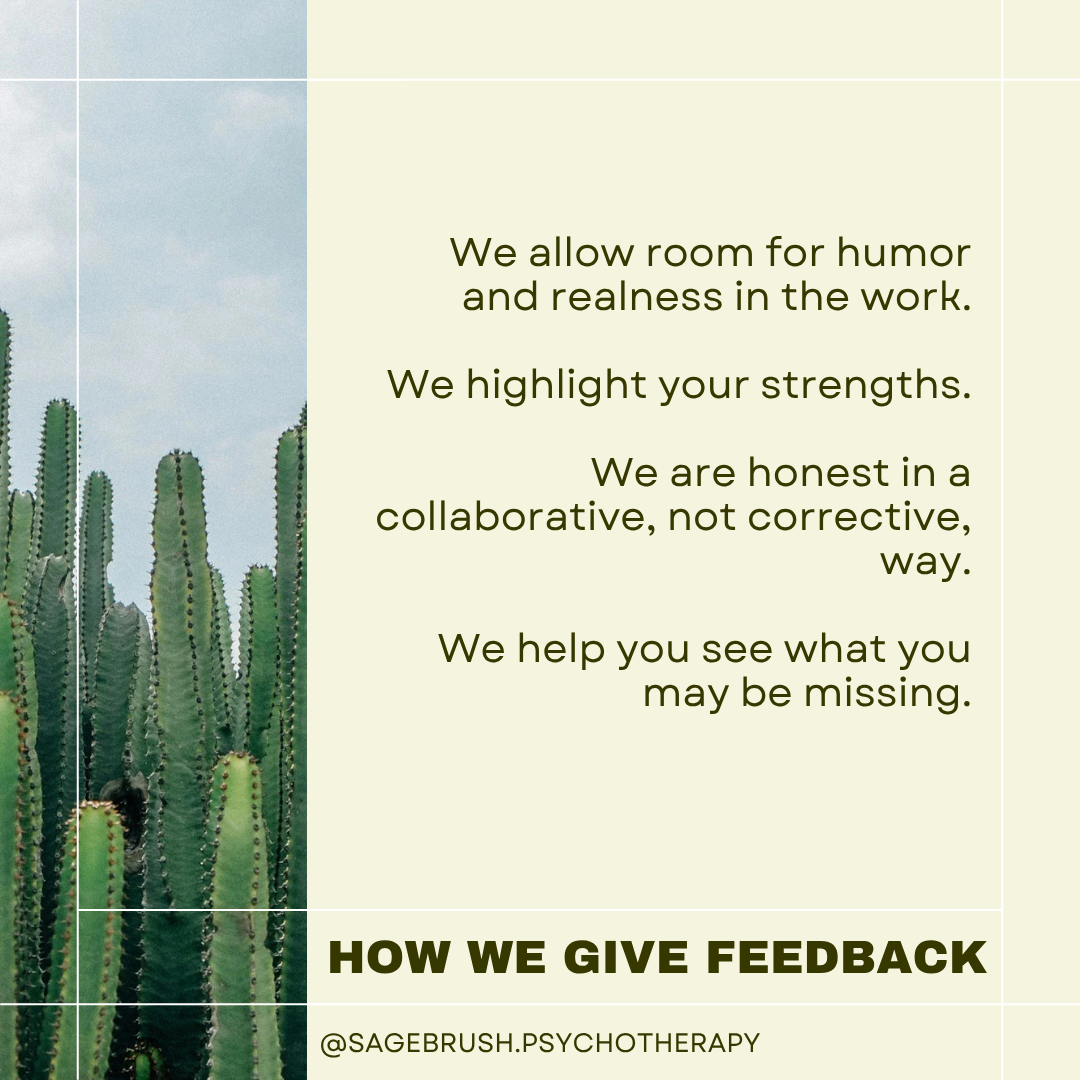
![How We Give Feedback graphic about humor, strengths, honesty, and insight. A detailed description is provided below.]()
How We Show Warmth graphic about connection, care, and emotional presence. A detailed description is provided below.
A graphic titled "How We Give Feedback" featuring a cluster of green cacti against a light sky background.
We allow room for humor and realness in the work.
We highlight your strengths.
We are honest in a collaborative, not corrective, way.
We help you see what you may be missing.
@SAGEBRUSH.PSYCHOTHERAPY
-
![How We Stay Honest Without Shaming graphic about supportive therapy principles. A detailed description is provided below.]()
How We Show Warmth graphic about connection, care, and emotional presence. A detailed description is provided below.
A graphic titled "How We Stay Honest Without Shaming" featuring a cactus illustration.
We see your power, your potential, and where you can go next.
We see the benefits of your behaviors as well as how they might have unintended consequences.
We understand why your patterns make sense and how they once helped.
@SAGEBRUSH.PSYCHOTHERAPY
-
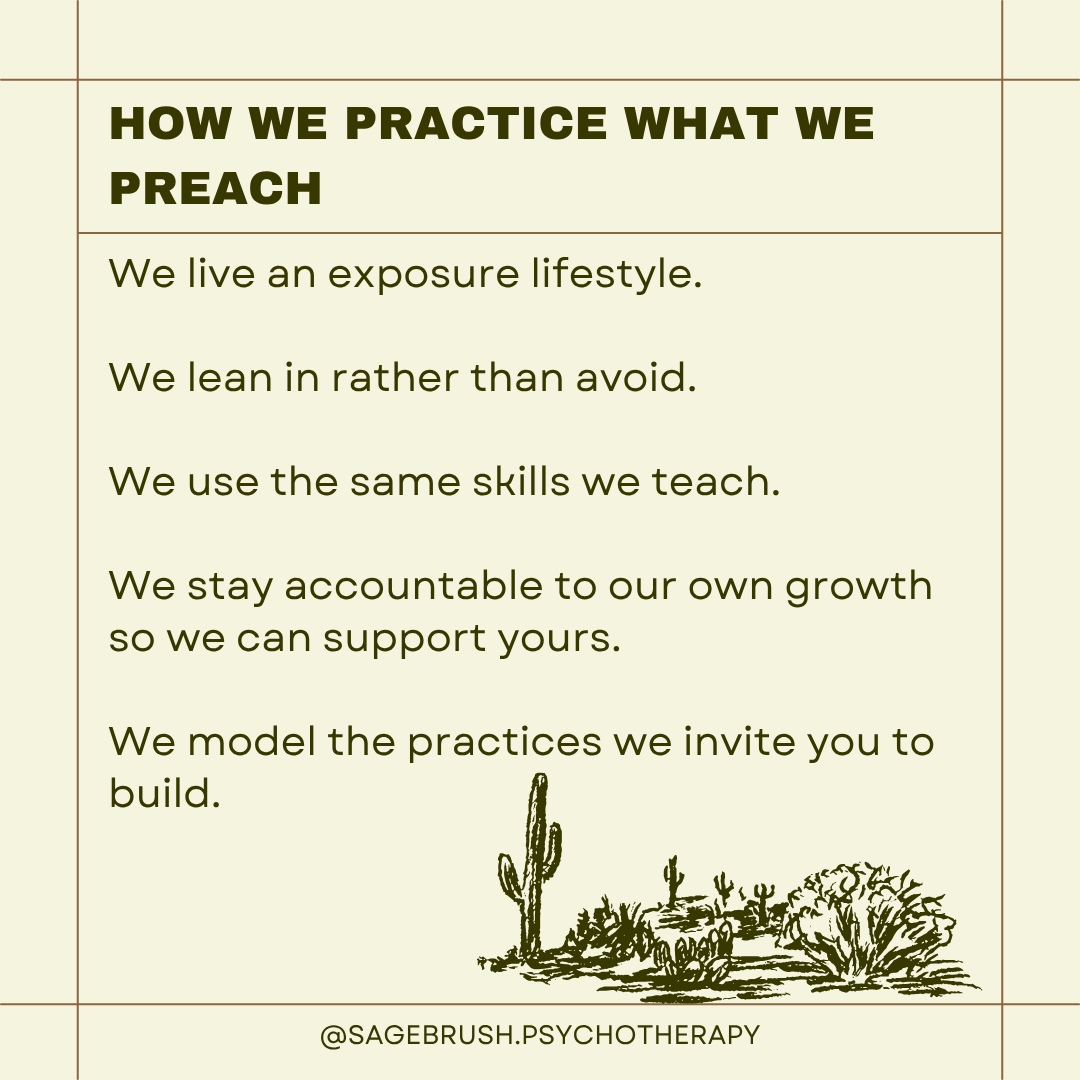
![Graphic about growth, accountability, and therapeutic skills. A detailed description is provided below.]()
How We Show Warmth graphic about connection, care, and emotional presence. A detailed description is provided below.
A graphic titled "How We Practice What We Preach" featuring a desert landscape illustration with cacti and shrubs.
We live an exposure lifestyle.
We lean in rather than avoid.
We use the same skills we teach.
We stay accountable to our own growth so we can support yours.
We model the practices we invite you to build.
@SAGEBRUSH.PSYCHOTHERAPY


Get to Know Our Group
Get to know Ciara
Ciara is the owner of Sagebrush Psychotherapy and is actively involved in the practice and clinical work. Her style is direct, thoughtful, grounded, and deeply engaged.
She has expertise with high-acuity clients and is committed to helping clinicians become more confident and more effective in their work. She approaches her work with humility and an awareness of her own fallibility, and looks for clinicians who bring that same level of self-reflection, accountability, and willingness to grow.
She has a genuine love of learning and is continually working to bring a high level of care and excellence to both her clinical work and the practice.
Practice Culture
We care deeply about the work we do and about each other. The team is warm, friendly, and genuinely supportive. There’s a real sense that we’re in this together.
We have each other’s backs, and want to see each other do well. Supervision and team meetings are spaces without judgment, where you can bring in what’s hard, be honest about what you’re unsure about, and work through it openly.
You’re not just maintaining a caseload here. You’re building your clinical judgment and developing confidence, with a team to bounce things off of so you’re not in it alone. We believe good therapists need thoughtful colleagues they can turn to for support, consultation, and honest discussion.
An added bonus is our lovely office, equipped with snacks, fidgets, and a well-decorated, comfortable space. There is also easy parking, which makes coming in and out of the day much smoother.
Before You Apply: Expectations for This Role
What is required to succeed in this role
Interest in DBT and working with higher-acuity clients, including Borderline Personality Disorder, significant emotion dysregulation, and suicidality
Willingness to lead a weekly DBT skills group (training provided)
Follow-through on tasks and responsibilities without reminders
Clear, timely communication with clients and the practice
Active participation in administrative and marketing responsibilities
Openness to feedback and continued development
Availability to see clients in person at least one day per week (two days highly preferred) in East LA
Evening and weekend availability
This role is not a fit if
You are not interested in running groups
You want a fully remote position
You are not willing to participate in administrative or marketing responsibilities
You have difficulty with consistency, follow-through, or communication
Clarity on Private Practice
Private practice works differently than agency and treatment center settings. While it offers a great deal of flexibility, it also requires a level of initiative that may not be the right fit for everyone. (Of course every private practice has its own unique set up.)
Things to consider:
Private practice requires an active role in building your caseload.
Referrals come in as inquiries, and clinicians are responsible for engaging in the consultation and intake process.
Sagebrush Psychotherapy provides a strong flow of inquiries, but referral volume can vary. There may be periods with many inquiries and periods with fewer, and rare but possible there may be lulls in referrals entirely. Caseloads take time to build up.
Clinicians who build and maintain a caseload tend to be very responsive and active. This includes following up with inquiries, staying on top of communication, and consistently reaching out rather than waiting. It also often involves putting effort into networking, engaging in marketing efforts, and responding to referral opportunities (for example, community groups or Facebook posts).
You are not expected to figure this out on your own. I actively support clinicians through this process and am available to help every step of the way.
Client demand is highest during evenings and weekends. In order to build and maintain a caseload, clinicians must offer some availability during these times.
What this set up allows for:
Long-term, meaningful work with clients
Developing your own clinical voice and judgment, with the support of deep, engaged supervision
Less burnout than high-volume, quota-driven settings
The Application
If there are questions or issues with the application please email ciara@sagebrushpsychotherapy.com